

CREST Certified Red Team Manager - Scenario : CCRTM-SC
- Exam Code: CCRTM-SC
- Exam Name: CREST Certified Red Team Manager - Scenario
- Updated: Sep 12, 2026 Q & A: 20 Questions and Answers

 PDF Version Demo

PC Test Engine
CREST CCRTM-SC Value Pack (Frequently Bought Together)

- If you purchase CREST CCRTM-SC Value Pack, you will also own the free online test engine.
- PDF Version + PC Test Engine + Online Test Engine
- Value Pack Total: $119.98 $79.99
About CREST CCRTM-SC Exam
Secure payment
We always attach high importance of our clients' benefit. For your property safety visiting and buy our CCRTM-SC : CREST Certified Red Team Manager - Scenario valid pdf torrent, we cooperate with the well-known reputation platform like Credit Card to receive your payment. So don't worry you'll lose your money. You can use your credit card which suitable for Credit Card. Choose our CREST Certified Red Team Manager - Scenario sure pass torrent, you will 100% pass.
After purchase, Instant Download: Upon successful payment, Our systems will automatically send the product you have purchased to your mailbox by email. (If not received within 12 hours, please contact us. Note: don't forget to check your spam.)
Free demos before purchase
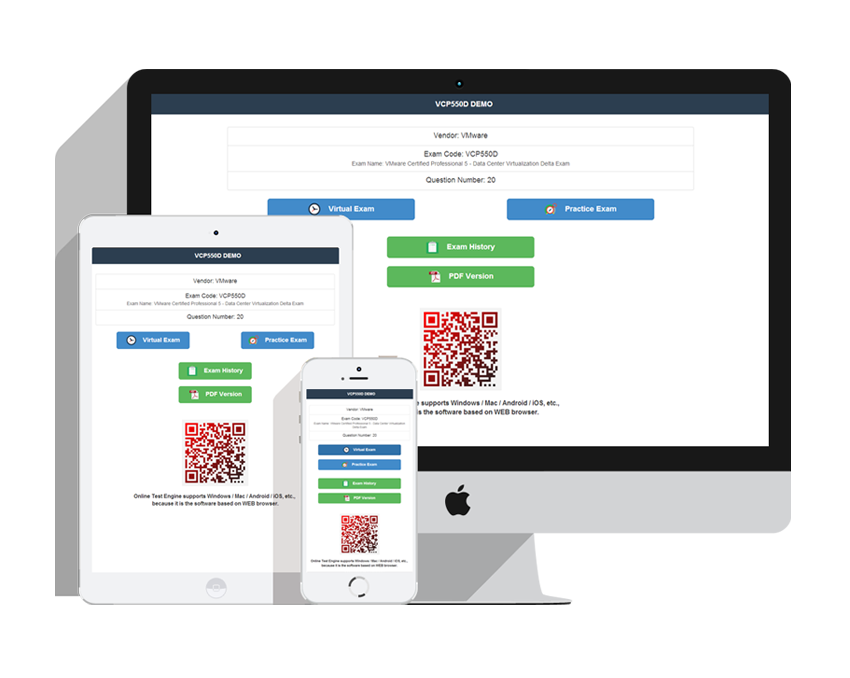
You may hesitate whether to take our software, or you're worry about it's worthy of buying it. It's easy to ensure your heart. We provide three different versions of CREST Certified CREST Certified Red Team Manager - Scenario free practice demos (PDF/PC Test Engine/Online Test Engine) for you, freely. It's simple and convenient for you to get the demos, just click our links on the product page. These CREST Certified Red Team Manager - Scenario demos will show you our whole style and some test question for you. If you are satisfactory with our model, you can pay for it then our system will send you the CREST Certified Red Team Manager - Scenario practice dumps within ten minutes.
Man struggles up wards. People desire for higher positions, so they should study hard and try to attain the CREST Certified Red Team Manager - Scenario certification for what they want. But there are exactly many barriers on the way you forward. You want a higher position in the industry, so you want to pass the CREST Certified Red Team Manager - Scenario exam, however, you feel boring, tired and fruitless when you prepare for your exam. Undoubtedly, it is the barrier separates you and your important CREST Certified Red Team Manager - Scenario certification. Play a leading role of worldwide certification dumps, we'll help you clear all the barriers in your road to pass the CREST Certified CREST Certified Red Team Manager - Scenario actual exam. We are able to make your study more acceptable, more interesting and happier. We stand behind you, support you to pass the exam. It's absolutely convenient. Apply our CREST Certified Red Team Manager - Scenario latest practice pdf, you can study in everywhere and everyplace you want with your mobile phone. It's not necessary for you to spend a lot of time to practice the CCRTM-SC free study torrent and you're able to study just in your short leisure time. The certificate will be sent to your pocket after only 20~30 hours study with CREST CREST Certified Red Team Manager - Scenario sure pass torrent by our examination database. Once you purchase, our system will send you the subjects by email instantly. Furthermore our professional team will checks and updates our software frequently. That is to say, we'll send you the newest and updated CREST Certified Red Team Manager - Scenario valid pdf torrent to you within one year after purchase. And over a year, we will give you the priority of half-off for buying our products and send you different discount activities information about our CREST Certified CREST Certified Red Team Manager - Scenario latest practice pdf. In addition, our team is famous for our high passing rate which up to 99%, so you completely needn't worry about our quality. Moreover, you can apply for full refund with your CREST Certified Red Team Manager - Scenario failed certification if you failed in your exam or change any other version of our products. Actually, we devotes ourselves the purpose of customers first, and we ensure you'll get what you want without a little bit of regret after choose us CREST Certified Red Team Manager - Scenario training torrent. You trust us, we return you the victory.

CREST CCRTM-SC Exam Syllabus Topics:
| Section | Objectives |
|---|---|
| Topic 1: Red Team Engagement Management | - Response to Scenario Injects
|
CREST Certified Red Team Manager - Scenario Sample Questions:
Background: You manage a red team engagement for Brackenfell Retail Group under an RoE that explicitly permits "controlled, non-destructive proof-of-concept payload execution to demonstrate exploitation of identified vulnerabilities" but explicitly prohibits "any activity resulting in encryption, deletion, or exfiltration of production data." During week 5, your team successfully exploits a vulnerability in an internal file server and, to demonstrate impact, executes a small proof-of-concept script that creates a single new, clearly labelled test file ("REDTEAM-POC-DO-NOT-DELETE.txt") containing only benign placeholder text, then takes a screenshot as evidence, and immediately deletes the test file it created.
A junior tester on the team, reviewing this activity in the daily standup, raises a question: "Doesn't creating and then deleting a file, even one we created ourselves, technically fall under 'deletion... of production data,' since it was on a production file server?" Separately, that same day, a different, more senior tester proposes going further on a different system: rather than just creating a placeholder file, they suggest locating one genuinely low-value, clearly non-critical existing file (e.g., an old, unused template document) already present on a production file share, and temporarily renaming it (not deleting it) to demonstrate write-access impact more "authentically," planning to rename it back immediately afterward.
Question: Assess whether the actions already taken (creating and deleting the labelled test file) were consistent with the RoE, and explain how you should respond to the senior tester's proposal to rename an existing production file. What broader RoE interpretation principle does this scenario illustrate?
Correct Answer:
See The answer in Explanation part below.
Explanation:
Step 1 - Analyse the already-completed action against the RoE's actual wording and intent. The RoE prohibits "deletion... of production data," which, read in context alongside the explicit permission for
"controlled, non-destructive proof-of-concept" activity, is clearly intended to protect the client's genuine, pre- existing production data and business operations - not to prohibit a tester deleting a file the tester itself created purely as evidence, containing no genuine client data, and clearly labelled as such. The junior tester's question is a reasonable and valuable prompt for careful interpretation, but on balance this specific action (create clearly labelled benign test artefact, evidence it, then remove it) is consistent with both the letter and the clear underlying intent of the RoE, since no genuine production data was ever placed at risk.
Step 2 - Do not dismiss the junior tester's question - use it constructively. Even though the specific action was likely fine, the question itself reflects exactly the kind of careful, RoE-literate thinking that should be encouraged, not brushed aside. The correct management response is to explicitly walk through the reasoning in Step 1 with the team, confirming the action was appropriate and why, so the team's shared understanding of how to interpret RoE boundaries in similar future situations is reinforced and documented (e.g., in the team's engagement log or internal methodology notes for this engagement).
Step 3 - Analyse the senior tester's proposal separately and much more critically. The proposal to rename an existing, genuine production file - even one assessed by the tester as "low-value" and even with an intention to rename it back - is materially different from Step 1's scenario, because it involves manipulating a real, pre- existing piece of the client's actual data/file estate, however minor the tester judges it to be. This risks falling within the spirit, and arguably the letter, of "activity resulting in... deletion... of production data" (a rename that fails to be reversed for any reason, however unlikely, would functionally be indistinguishable from the original file being lost) and certainly could be seen as testing the boundary of "non-destructive" in a way the RoE was not clearly drafted to authorise.
Step 4 - Reject the proposal, or at minimum, escalate before proceeding. You should not approve the senior tester's proposal to proceed on the strength of the tester's own personal judgement about the file's low value - this is precisely the kind of individually judged, unilateral scope interpretation the syllabus warns against, since "low value" is a business/data-ownership judgement the client, not the tester, is actually positioned to make. If the team genuinely believes this kind of demonstration would add meaningful additional value over the already-completed placeholder-file approach, the correct process is to raise it explicitly with the Control Group/Control Team for an explicit decision (potentially resulting in a documented, narrow RoE clarification or amendment permitting a specifically defined, client-nominated test file to be used this way) - not to proceed based on the tester's own on-the-spot assessment of an existing file's importance.
Step 5 - Extract the broader RoE interpretation principle. This scenario illustrates that RoE interpretation requires reading specific clauses in light of their underlying purpose and risk rationale, not applying either an overly literal reading that would forbid entirely safe, client-protective evidence practices (Step 1), or an overly permissive reading that stretches a "non-destructive" allowance to cover manipulation of genuine, real client data based on an individual tester's own risk judgement (Step 3-4). Ambiguous or borderline situations - precisely because reasonable people can interpret them differently, as this scenario demonstrates - should be resolved through escalation to the accountable governance body, not through unilateral interpretation by whichever tester is at the keyboard at the time, however experienced.
Step 6 - Reinforce this through team practice. As Red Team Manager, you should use this episode as a live training moment: reinforcing to the whole team (not just the two testers involved) that "reversibility intended" is not, on its own, sufficient justification for manipulating genuine client data without escalation, whereas creating and removing entirely tester-generated, clearly labelled artefacts for evidentiary purposes is normally consistent with a well-drafted non-destructive RoE - and that when genuinely unsure, the standing instruction is always to pause and escalate rather than proceed on individual judgement.
Conclusion: The completed placeholder-file action was consistent with the RoE's clear intent and should be confirmed as appropriate; the proposal to rename an existing production file should be declined or, at minimum, escalated to the Control Group/Control Team for an explicit decision rather than proceeding on the tester's own judgement; and the underlying lesson is that RoE boundaries must be interpreted purposively and any genuine ambiguity resolved through escalation, not unilateral, individually judged risk-taking.
---
Background: Your firm has been engaged by Northgate Financial Group, a banking group headquartered in the UK with a regulated banking subsidiary in Australia and a smaller wealth management subsidiary in Singapore. The UK entity has been selected for CBEST. Separately, and coincidentally in the same year, the Australian subsidiary's regulators have indicated interest in the bank participating in a CORIE-aligned exercise, and the Singapore subsidiary - while not currently mandated for any specific named scheme - has asked whether an AASE-aligned voluntary exercise would be sensible given its size and risk profile.
Northgate's newly appointed Group Head of Cyber Resilience, who has significant experience with CBEST from a previous UK-only role but no prior exposure to CORIE or AASE, asks you: "Since we're already doing CBEST properly in the UK, can we just apply the exact same scope document, RoE template, and Control Group structure to the Australian and Singapore entities, just with the names changed? It would save a huge amount of time and I already know CBEST works well." Question: Explain how you would respond to this request, addressing what can legitimately be reused across the three engagements and what must be handled separately for each, with reference to the relevant frameworks and jurisdictions involved.
Correct Answer:
See The answer in Explanation part below.
Explanation:
Step 1 - Acknowledge the genuine, legitimate efficiency instinct while correcting the flawed assumption.
The Group Head's instinct to seek efficiency across a multi-jurisdictional group is reasonable and reflects good practice management thinking, but the specific proposal - reusing the exact CBEST scope, RoE, and governance structure with only the names changed - is not appropriate, because it assumes CBEST, CORIE, and AASE are interchangeable, when in fact, as covered in the syllabus, they are conceptually related but administered by different authorities, under different legal frameworks, with different specific procedural, documentation, and governance requirements.
Step 2 - Explain what must NOT be reused unchanged. The formal scope specification, authorisation/legal documentation, and specific governance terminology and process must each be developed to genuinely meet the requirements of the applicable local scheme and legal jurisdiction: CBEST (UK, Bank of England-owned, governed by UK law including the Computer Misuse Act and UK GDPR) for the UK entity; the CORIE- aligned framework (Australia, developed with Australian regulatory involvement, governed by Australian law) for the Australian subsidiary; and, for Singapore, since the wealth management subsidiary is not currently mandated but considering a voluntary AASE-aligned exercise, the relevant Monetary Authority of Singapore-associated expectations and Singapore law, governed as a voluntary but still rigorous exercise.
Applying a UK-templated document with only the entity name changed for the Australian or Singapore engagements would repeat exactly the "assume it's the same everywhere" mistake highlighted elsewhere in this syllabus, creating real legal and governance risk in each local jurisdiction.
Step 3 - Explain what CAN legitimately be shared or coordinated at group level. Consistent with the syllabus's discussion of building a strong core methodology adaptable across the "family" of related frameworks, your firm can legitimately reuse: the underlying core delivery methodology and quality standards (structured scoping process, threat-intelligence-led scenario design principles, reporting quality standards, professional conduct expectations); internal knowledge management and staff expertise built through CBEST experience, appropriately supplemented with genuine CORIE- and AASE-specific expertise for those engagements; and sensible group-level coordination - such as a group-level oversight function that receives appropriately summarised, high-level risk reporting across all three engagements to support board-level group risk oversight - provided this coordination does not blur or replace each entity's own distinct, locally- appropriate governance structure and formal authorisation.
Step 4 - Address governance structure specifically. Each entity needs its own properly constituted local governance body (a UK Control Group for the CBEST engagement, and an equivalent, appropriately named and locally appropriate governance structure for the Australian and Singapore engagements, reflecting each local scheme's own terminology and requirements) - reusing the "CBEST Control Group" label and structure wholesale for Australia and Singapore, as though it automatically satisfied their different local expectations, would not be appropriate, mirroring the syllabus's point about not assuming schemes are legally interchangeable.
Step 5 - Recommend a practical way forward. You should propose to the Group Head a practical plan: use the firm's proven core methodology and quality standards as the consistent foundation across all three engagements (genuine efficiency gain), while commissioning or applying genuine local expertise (including local legal input where needed, consistent with the legal considerations domain) to properly adapt scope, authorisation/RoE documentation, and governance structure for each jurisdiction's actual applicable scheme and law - explaining that this hybrid approach captures real, legitimate efficiency without the serious legal and governance risk of the fully "copy-paste" approach originally proposed.
Step 6 - Note the additional nuance for the voluntary Singapore engagement. For Singapore, since no scheme is currently mandated, you should also clarify with the Group Head that proceeding with a voluntary AASE-aligned exercise is a legitimate and sensible option (echoing the syllabus's point that intelligence-led testing can be conducted on a voluntary, best-practice basis even absent a specific mandate), but that
"voluntary" does not mean "low rigor" - the same careful, locally-appropriate scoping, legal, and governance discipline should apply as for the mandated UK and Australian engagements.
Conclusion: The three engagements share a valuable common methodological foundation that can and should be leveraged for efficiency, but the specific scope, authorisation/RoE documentation, and governance structure must each be properly and separately developed to reflect CBEST, the CORIE-aligned framework, and the Singapore context respectively, given their distinct legal bases, owning authorities, and jurisdictional requirements - the "just change the names" approach originally proposed should be clearly and constructively declined.
---


Related Certifications
Over 81355+ Satisfied Customers
Popular Vendors
What Clients Say About Us
Why Choose Us
-
QUALITY AND VALUE
PracticeTorrent Practice Exams are written to the highest standards of technical accuracy, using only certified subject matter experts and published authors for development - no all study materials.
-
TESTED AND APPROVED
We are committed to the process of vendor and third party approvals. We believe professionals and executives alike deserve the confidence of quality coverage these authorizations provide.
-
EASY TO PASS
If you prepare for the exams using our PracticeTorrent testing engine, It is easy to succeed for all certifications in the first attempt. You don't have to deal with all dumps or any free torrent / rapidshare all stuff.
-
TRY BEFORE BUY
PracticeTorrent offers free demo of each product. You can check out the interface, question quality and usability of our practice exams before you decide to buy.
Our Clients











Get the high score and achieve the certification with our latest practice torrent. The complete exam prep torrent contains the questions & answers which are related to the actual test. You can pass your actual test at first attempt.
Tags
- NSE7_CDS_AR-7.6 practice torrentMay 28, 2022
- CISSP-ISSMP practice torrentMay 28, 2022
- AZ-700J practice torrentMay 28, 2022
- DP-420J practice torrentMay 28, 2022
Contact Us
From Monday to Saturday
Support: Contact now
If you have any question please leave me your email address, we will reply and send email to you in 12 hours.
Copyright © 2026 PracticeTorrent NETWORK CO.,LIMITED. All Rights Reserved. All trademarks used are properties of their respective owners. Privacy Policy